
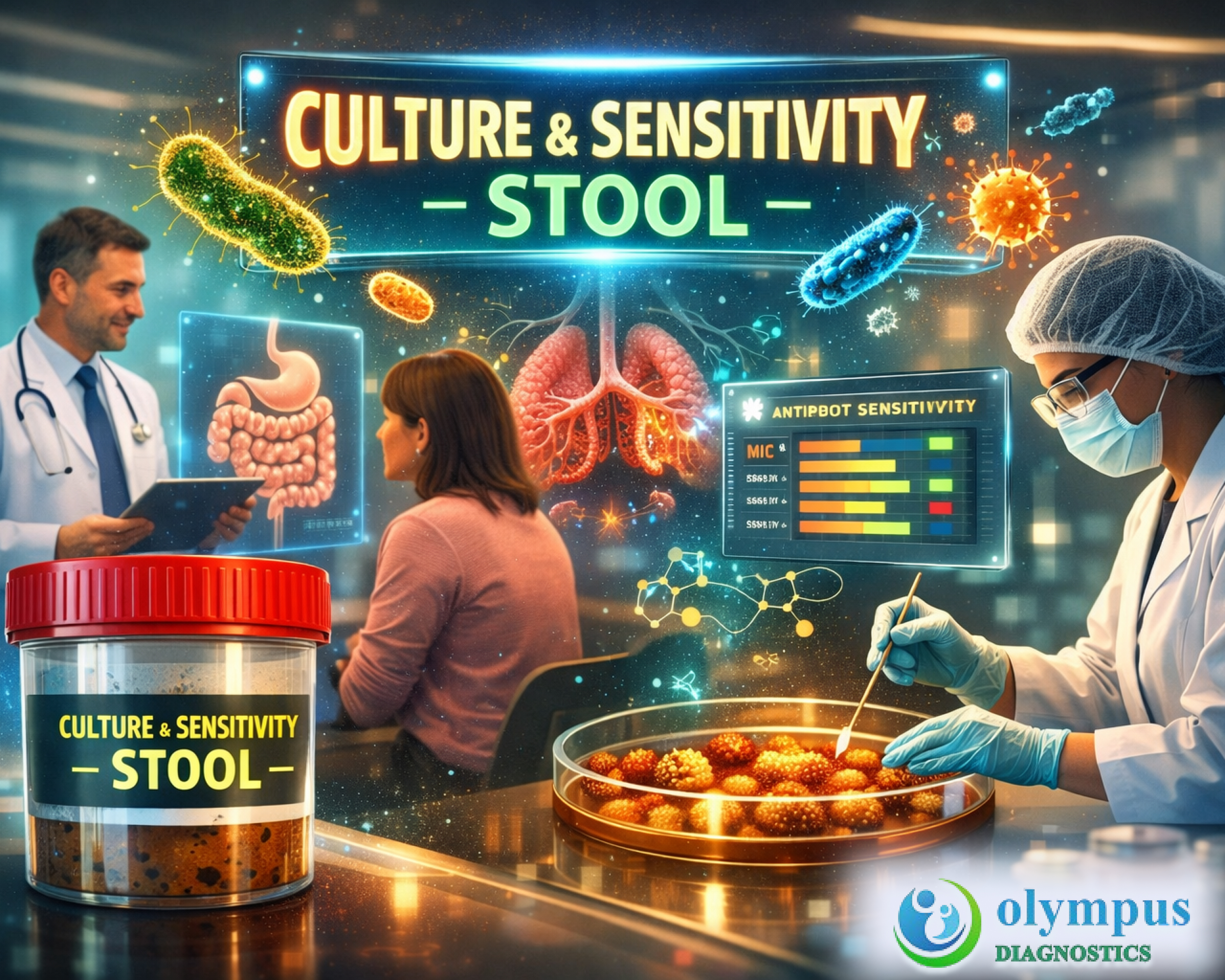
Stool samples are cultured in the laboratory to isolate bacteria, fungi, or parasites responsible for gastrointestinal infections.
Once organisms are identified, antibiotic sensitivity testing is performed to determine effective treatment options.
Clinical uses include:
Diagnosing bacterial gastroenteritis, dysentery, and foodborne infections.
Identifying causative organisms such as Salmonella, Shigella, E. coli, Campylobacter, and Vibrio cholerae.
Detecting antibiotic resistance patterns to guide therapy.
Monitoring recurrent or chronic gastrointestinal infections.
Provides definitive microbiological evidence for infection management in gastroenterology.