
244, 1st Main Rd, near Rajkumar, Kasturi Layout, Kaveri Nagar, Basaweshwara Nagar, Bengaluru, Karnataka 560079
08:00 am - 10:00 pm Monday-Saturday
244, 1st Main Rd, near Rajkumar, Kasturi Layout, Kaveri Nagar, Basaweshwara Nagar, Bengaluru, Karnataka 560079
08:00 am - 10:00 pm Monday-Saturday
ACTIVE PARTIAL THROMBOPLASTIN TIME (APTT)

Active Partial Thromboplastin Time (Aptt)

₹ 600 ₹ 700 30% OFF
Booking Assistance Online
Need help? Chat with us on WhatsApp
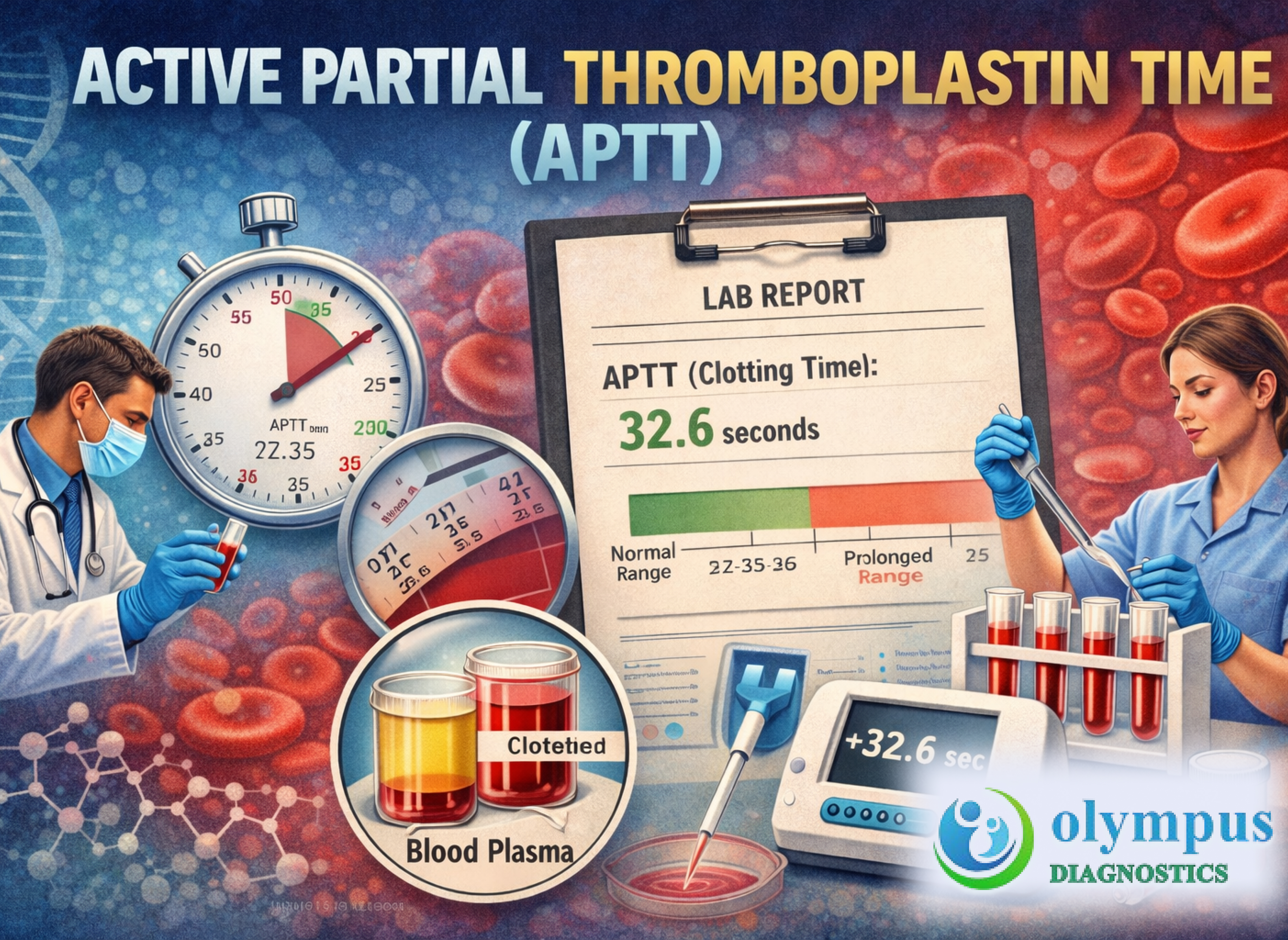
The Activated Partial Thromboplastin Time (APTT) test measures how long it takes blood to clot. It is commonly used to evaluate clotting disorders and monitor patients on anticoagulant therapy (like heparin).

Sample Type

Blood

Includes

16 Parameters

Report

Within 24 hours

Performed by certified phlebotomists

Activated Partial Thromboplastin Time (APTT) Test Overview

APTT is a blood test that assesses the function of the intrinsic and common pathways of the coagulation cascade.

It helps detect bleeding disorders, clotting disorders, and monitor anticoagulant therapy.

Doctors often order APTT along with Prothrombin Time (PT) to get a complete picture of blood clotting ability.

Clinical uses include:

Diagnosing hemophilia and other clotting factor deficiencies.

Monitoring patients receiving heparin therapy.

Investigating unexplained bleeding or abnormal clotting.

The test is simple, safe, and requires a blood sample.

Analyte: Time taken for plasma to clot after adding reagents (measured in seconds).

Normal Range: Typically 25–35 seconds (ranges may vary by lab).

Prolonged APTT: May indicate hemophilia, von Willebrand disease, liver disease, vitamin K deficiency, or anticoagulant therapy.

Shortened APTT: Rare, but may suggest increased risk of clotting.

Clinical Use:

Detects clotting factor deficiencies.

Monitors anticoagulant therapy (especially heparin).

Helps diagnose bleeding disorders.